

Union Maritime takes delivery of world’s first LNG and wind-powered LR2 tanker

The vessel is designed to meet FuelEU Maritime requirements through to 2040, including FuelEU Phase 3
(Source: Union Maritime)
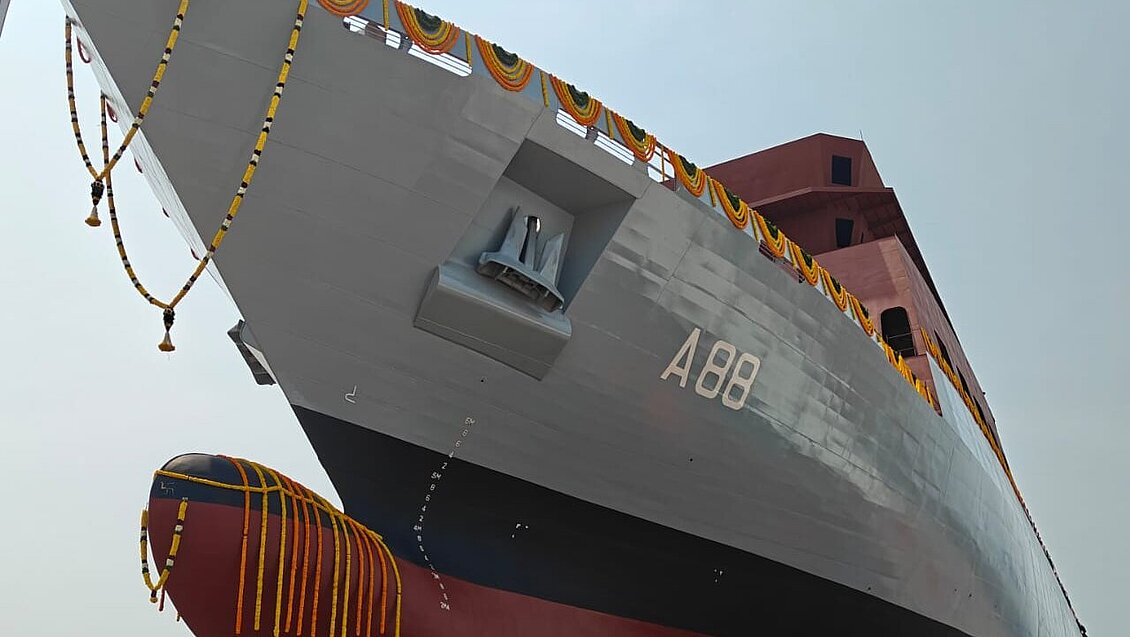
Union Maritime, based in London, has taken delivery of the 114,000dwt tanker, named Spa, which is equipped with two WindWings® sails from Bar Technologies. The vessel, built at Yangzijiang Shipbuilding in China, is thought to be the first vessel of its kind to be powered by a dual-fuel LNG engine and wind sails.
The tanker, the first of two sisters built at the Chinese yard, is thought to be one of the most advanced LR2 tankers so far. It will comply with FuelEU Maritime requirements until 2040, including the demanding Phase 3 of the IMO regulation.
In a statement, the company said that its performance will achieve an almost 50% improvement against the Energy Efficiency Design Index baseline, as well as a 27% improvement against the EEDI Phase 3 requirement.
Union Maritime managing director, Laurent Cadji, said: “The delivery of MT Spa marks an important step in the delivery of our long-term strategy. By combining LNG dual fuel capability with wind assisted propulsion, we are investing in solutions that deliver tangible emissions reductions today, while retaining the flexibility required for the future. This approach underpins our fleet renewal programme and our commitment to decarbonisation at scale.”
Union Maritime operates a fleet of more than 70 vessels, mostly tankers and bulk carriers, and has a further 34 ships on order.


Union Maritime takes delivery of world’s first LNG and wind-powered LR2 tanker
The vessel is designed to meet FuelEU Maritime requirements through to 2040, including FuelEU Phase 3
(Source: Union Maritime)
Union Maritime, based in London, has taken delivery of the 114,000dwt tanker, named Spa, which is equipped with two WindWings® sails from Bar Technologies. The vessel, built at Yangzijiang Shipbuilding in China, is thought to be the first vessel of its kind to be powered by a dual-fuel LNG engine and wind sails.
The tanker, the first of two sisters built at the Chinese yard, is thought to be one of the most advanced LR2 tankers so far. It will comply with FuelEU Maritime requirements until 2040, including the demanding Phase 3 of the IMO regulation.
In a statement, the company said that its performance will achieve an almost 50% improvement against the Energy Efficiency Design Index baseline, as well as a 27% improvement against the EEDI Phase 3 requirement.
Union Maritime managing director, Laurent Cadji, said: “The delivery of MT Spa marks an important step in the delivery of our long-term strategy. By combining LNG dual fuel capability with wind assisted propulsion, we are investing in solutions that deliver tangible emissions reductions today, while retaining the flexibility required for the future. This approach underpins our fleet renewal programme and our commitment to decarbonisation at scale.”
Union Maritime operates a fleet of more than 70 vessels, mostly tankers and bulk carriers, and has a further 34 ships on order.
Union Maritime takes delivery of world’s first LNG and wind-powered LR2 tanker
The vessel is designed to meet FuelEU Maritime requirements through to 2040, including FuelEU Phase 3
(Source: Union Maritime)
Union Maritime, based in London, has taken delivery of the 114,000dwt tanker, named Spa, which is equipped with two WindWings® sails from Bar Technologies. The vessel, built at Yangzijiang Shipbuilding in China, is thought to be the first vessel of its kind to be powered by a dual-fuel LNG engine and wind sails.
The tanker, the first of two sisters built at the Chinese yard, is thought to be one of the most advanced LR2 tankers so far. It will comply with FuelEU Maritime requirements until 2040, including the demanding Phase 3 of the IMO regulation.
In a statement, the company said that its performance will achieve an almost 50% improvement against the Energy Efficiency Design Index baseline, as well as a 27% improvement against the EEDI Phase 3 requirement.
Union Maritime managing director, Laurent Cadji, said: “The delivery of MT Spa marks an important step in the delivery of our long-term strategy. By combining LNG dual fuel capability with wind assisted propulsion, we are investing in solutions that deliver tangible emissions reductions today, while retaining the flexibility required for the future. This approach underpins our fleet renewal programme and our commitment to decarbonisation at scale.”
Union Maritime operates a fleet of more than 70 vessels, mostly tankers and bulk carriers, and has a further 34 ships on order.
Union Maritime takes delivery of world’s first LNG and wind-powered LR2 tanker
The vessel is designed to meet FuelEU Maritime requirements through to 2040, including FuelEU Phase 3
(Source: Union Maritime)
Union Maritime, based in London, has taken delivery of the 114,000dwt tanker, named Spa, which is equipped with two WindWings® sails from Bar Technologies. The vessel, built at Yangzijiang Shipbuilding in China, is thought to be the first vessel of its kind to be powered by a dual-fuel LNG engine and wind sails.
The tanker, the first of two sisters built at the Chinese yard, is thought to be one of the most advanced LR2 tankers so far. It will comply with FuelEU Maritime requirements until 2040, including the demanding Phase 3 of the IMO regulation.
In a statement, the company said that its performance will achieve an almost 50% improvement against the Energy Efficiency Design Index baseline, as well as a 27% improvement against the EEDI Phase 3 requirement.
Union Maritime managing director, Laurent Cadji, said: “The delivery of MT Spa marks an important step in the delivery of our long-term strategy. By combining LNG dual fuel capability with wind assisted propulsion, we are investing in solutions that deliver tangible emissions reductions today, while retaining the flexibility required for the future. This approach underpins our fleet renewal programme and our commitment to decarbonisation at scale.”
Union Maritime operates a fleet of more than 70 vessels, mostly tankers and bulk carriers, and has a further 34 ships on order.