
Estonian workboat to run on biomethane and batteries
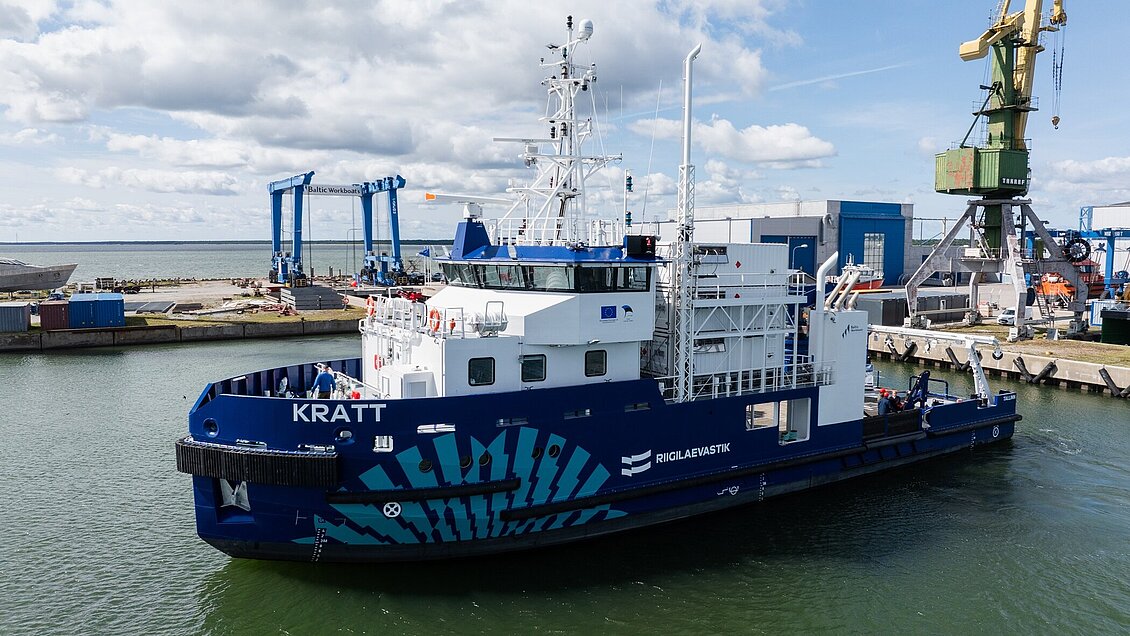
Kratt, Estonia’s new multipurpose workboat, combines compressed biomethane and battery-electric propulsion for state maritime operations
(Source: Estonia State Fleet)
The Estonian State Fleet has taken delivery of Kratt, a 38m-long multipurpose workboat powered by compressed biomethane (CBM) and battery-electric propulsion. Designed and built by Estonian shipbuilder Baltic Workboats, the vessel will enter service in Estonian waters this autumn.
Kratt will perform a wide range of maritime tasks, including buoy maintenance, fairway services, marine research, pollution response and search-and-rescue operations. It is the first large workboat in Estonia and the nearby region to use CBM as its primary fuel while also featuring a 400-kWh battery system. The vessel can travel up to 1,000 nautical miles at seven knots on biomethane and operate for up to two hours at five knots on battery power alone.
The workboat includes an approximately 50m2 wet and dry laboratory, accommodation for six crew members and up to ten researchers, and can remain at sea for up to seven days without replenishment. Its equipment also provides approximately 25% of Estonia’s oil pollution response capacity. The project cost EUR 22 million and was financed through the EU’s NextGenerationEU Recovery Fund.


Estonian workboat to run on biomethane and batteries
Kratt, Estonia’s new multipurpose workboat, combines compressed biomethane and battery-electric propulsion for state maritime operations
(Source: Estonia State Fleet)
The Estonian State Fleet has taken delivery of Kratt, a 38m-long multipurpose workboat powered by compressed biomethane (CBM) and battery-electric propulsion. Designed and built by Estonian shipbuilder Baltic Workboats, the vessel will enter service in Estonian waters this autumn.
Kratt will perform a wide range of maritime tasks, including buoy maintenance, fairway services, marine research, pollution response and search-and-rescue operations. It is the first large workboat in Estonia and the nearby region to use CBM as its primary fuel while also featuring a 400-kWh battery system. The vessel can travel up to 1,000 nautical miles at seven knots on biomethane and operate for up to two hours at five knots on battery power alone.
The workboat includes an approximately 50m2 wet and dry laboratory, accommodation for six crew members and up to ten researchers, and can remain at sea for up to seven days without replenishment. Its equipment also provides approximately 25% of Estonia’s oil pollution response capacity. The project cost EUR 22 million and was financed through the EU’s NextGenerationEU Recovery Fund.
Estonian workboat to run on biomethane and batteries
Kratt, Estonia’s new multipurpose workboat, combines compressed biomethane and battery-electric propulsion for state maritime operations
(Source: Estonia State Fleet)
The Estonian State Fleet has taken delivery of Kratt, a 38m-long multipurpose workboat powered by compressed biomethane (CBM) and battery-electric propulsion. Designed and built by Estonian shipbuilder Baltic Workboats, the vessel will enter service in Estonian waters this autumn.
Kratt will perform a wide range of maritime tasks, including buoy maintenance, fairway services, marine research, pollution response and search-and-rescue operations. It is the first large workboat in Estonia and the nearby region to use CBM as its primary fuel while also featuring a 400-kWh battery system. The vessel can travel up to 1,000 nautical miles at seven knots on biomethane and operate for up to two hours at five knots on battery power alone.
The workboat includes an approximately 50m2 wet and dry laboratory, accommodation for six crew members and up to ten researchers, and can remain at sea for up to seven days without replenishment. Its equipment also provides approximately 25% of Estonia’s oil pollution response capacity. The project cost EUR 22 million and was financed through the EU’s NextGenerationEU Recovery Fund.
Estonian workboat to run on biomethane and batteries
Kratt, Estonia’s new multipurpose workboat, combines compressed biomethane and battery-electric propulsion for state maritime operations
(Source: Estonia State Fleet)
The Estonian State Fleet has taken delivery of Kratt, a 38m-long multipurpose workboat powered by compressed biomethane (CBM) and battery-electric propulsion. Designed and built by Estonian shipbuilder Baltic Workboats, the vessel will enter service in Estonian waters this autumn.
Kratt will perform a wide range of maritime tasks, including buoy maintenance, fairway services, marine research, pollution response and search-and-rescue operations. It is the first large workboat in Estonia and the nearby region to use CBM as its primary fuel while also featuring a 400-kWh battery system. The vessel can travel up to 1,000 nautical miles at seven knots on biomethane and operate for up to two hours at five knots on battery power alone.
The workboat includes an approximately 50m2 wet and dry laboratory, accommodation for six crew members and up to ten researchers, and can remain at sea for up to seven days without replenishment. Its equipment also provides approximately 25% of Estonia’s oil pollution response capacity. The project cost EUR 22 million and was financed through the EU’s NextGenerationEU Recovery Fund.